Mettler Toledo Authorised Distributor

Industrial scales

Industrial Weighing Scales in Ghana

Platform, bench, crane and laboratory scales specified for the conditions they actually work in - dusty yards, wash-down rooms, coastal air and an unreliable grid - then installed, calibrated and serviced from our Tema workshop.

Buying a scale is easy. Buying the right one is the job.

Most weighing problems on Ghanaian sites are not manufacturing faults. They are specification mistakes made at purchase: a mild steel platform ordered for a fish processing hall, a 5-tonne scale bought to weigh 400 kg pallets, a bench scale with 5 g divisions bought to fill 50 g sachets. The equipment then does exactly what it was built to do, and everybody blames the equipment.

Conditions here are harsher than the datasheet assumes. In Tema and Takoradi, salt-laden air works into painted frames, cable glands and junction boxes within a season or two. Inland, the harmattan pushes fine dust past any seal that is not properly rated. Power is the third problem: the switching surges around an outage kill more indicators than lightning does, and a balance that lost air conditioning overnight will read differently at 8am than it did at close of business.

So we specify against the room, not the brochure. Wash-down or coastal means full stainless and sealed cells. Dust and vibration mean protected cabling and overload stops. Anywhere weight decides money, it means a trade-approved instrument that the Ghana Standards Authority can verify. The rest of this page is how we make those calls, so you can make them too.

The range

Four families cover almost every site

Truck weighing aside, industrial weighing in Ghana comes down to four types of instrument. What separates them is not price - it is where the load sits while you read it.

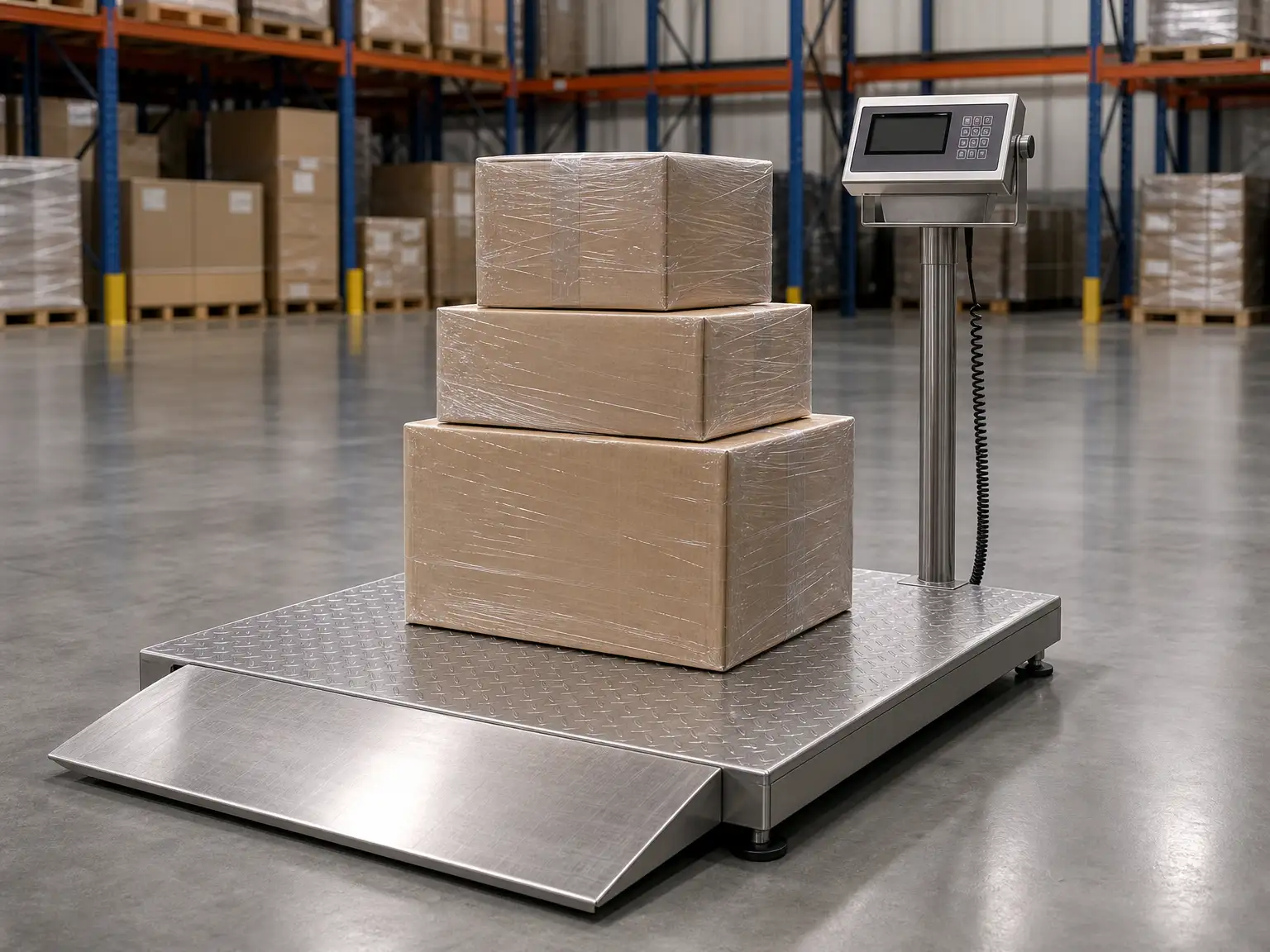
Stainless steel floor platform scale holding stacked cartons next to a column-mounted digital indicator in a warehouse

Platform and floor scales

A low-profile deck sunk into a pit frame or fitted with a ramp so a pallet truck rolls straight on. This is what you want at goods-in, at dispatch, and anywhere sacks, drums or pallets are weighed all day. Capacities run from 300 kg to 5 tonnes, and the platform should be sized to your pallet or drum footprint - not to whatever the catalogue offers.

  • Goods-in and dispatch checkweighing
  • Bagged maize, rice, cocoa and fertiliser
  • Drums of paint, resin and chemicals
Compare our platform and floor scale range
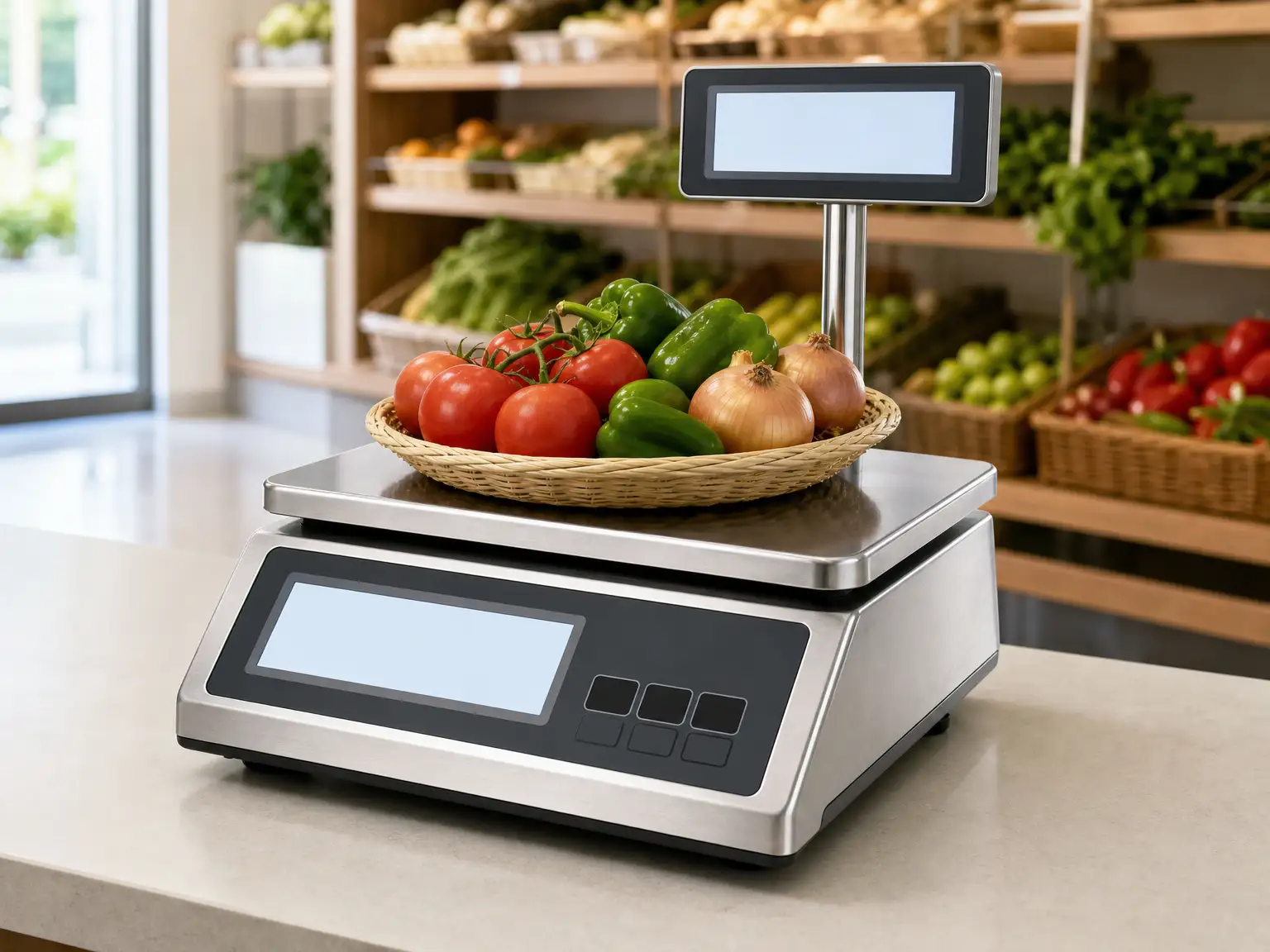
Stainless steel digital bench scale weighing fresh vegetables with a second customer-facing display

Bench and counter scales

Everything that happens at working height: portioning, packing, sachet filling, dispensing and small-parts counting. Resolution matters far more than capacity here - a 30 kg bench scale reading in 5 g steps is useless for a 20 g sachet. Counting models convert a sample weight into a piece count, which is the fastest way to stop your team counting caps and fasteners by hand.

  • Bakery, sachet water and food packing
  • Pharmacy and dispensing counters
  • Workshop small-parts counting
See bench, counter and counting scale options
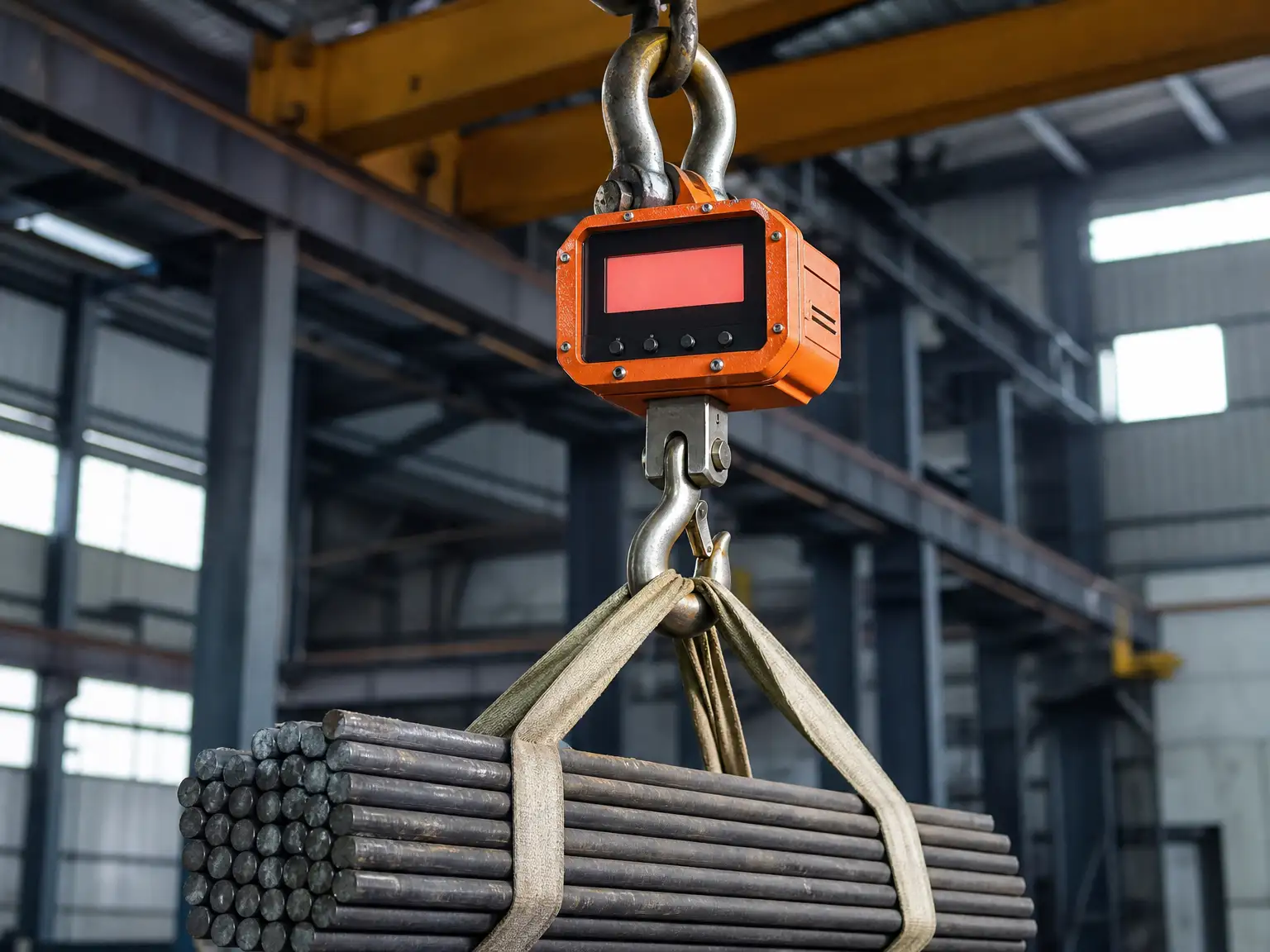
Orange digital crane scale hanging from a gantry hook while weighing a bundle of steel bars

Crane and hanging scales

When a load never touches the ground, you weigh it in the air. The scale hangs between hook and sling and reads on a bright display or a handheld remote at a safe distance. Capacities run from 1 tonne to 50 tonnes. Check the shackle and hook rating and the overload alarm before you check anything else - this is lifting equipment first and an instrument second.

  • Scrap and metal recycling yards
  • Steel fabrication and shipyards
  • Fish landing and cold store handling
Read the crane and hanging scale specifications
Analytical laboratory balance inside a glass draft shield with a gloved hand placing a calibration weight on the pan

Laboratory and precision balances

Analytical balances read to 0.1 mg behind a glass draft shield; precision models cover the 0.001 g to 0.1 g range for QC, formulation and teaching labs. Internal motorised calibration is worth paying for in Ghana, because it corrects the balance after the temperature swing that follows air conditioning being off overnight or a power cut at 3am.

  • Pharmaceutical and QC laboratories
  • University and research benches
  • Gold and mineral assay work
Review our laboratory and precision balance models

Weighbridges, test weights and weighbridge software sit alongside these - you can browse the full WeighTech equipment catalogue if you are specifying a whole site.

Capacity and division size, without over-buying

Capacity and readability pull against each other. A scale divides its full range into a fixed number of steps, so the higher the capacity, the coarser every reading becomes. Doubling capacity for comfort quietly doubles the smallest change you can see.

Work from the heaviest real load, including the pallet, crate or trolley, and add about twenty percent of headroom. Then ask what the smallest difference is that you need to detect - the tolerance on a filled bag, the minimum billable increment, the point at which a short delivery becomes a dispute. That number, not the capacity, decides which model you buy.

One more habit worth building: keep a single scale for one class of work. Sites that weigh a 900 kg pallet and a 2 kg sample on the same platform end up trusting neither number.

A worked example

A cocoa buying shed weighing 64 kg sacks does not need a 3-tonne platform. A 600 kg scale reading in 100 g steps shows the sack difference that matters at grading, holds resolution as sacks absorb moisture, and still takes a double stack without complaint.

Stainless steel, IP ratings and the coast

An IP rating describes the whole instrument only if every part carries it. A stainless pan bolted to a painted frame with IP65 load cells is a wash-down scale in the brochure and a warranty claim in practice. For food processing, fish handling, breweries and anywhere a hose is used at end of shift, ask for a full 304 stainless frame, hermetically sealed IP68 cells and a sealed indicator with a membrane keypad.

Coastal sites need the same build even when nothing is ever washed. Salt air in Tema, Takoradi and Elmina corrodes cable glands, screw terminals and junction box seals long before it marks the frame, and corrosion inside a junction box shows up as a scale that drifts and will not hold zero.

Dust is the inland version of the same story. Sealed cells and protected cable runs cost more once; a cell full of harmattan dust is a call-out plus a part plus a recalibration, every season.

Legal for trade

Trade-approved scales versus internal-use scales

If the number on the display sets what somebody pays or gets paid, the instrument is being used for trade. That covers produce buying centres, scrap yards, fuel and gas depots, retail counters and any packed goods sold by weight. Those instruments must be an approved type, and they must be verified and stamped by the Ghana Standards Authority before they are used commercially - and re-verified after repair or relocation.

Scales used purely inside your own process - stock counts, batching, checking yield between production stages - carry no such obligation. They still need calibration to be useful, but you are calibrating them for yourself, not for an inspector.

The mistake that costs money is discovering the difference late: a non-approved bench scale already installed at a sales counter, or an approved weighbridge moved to a new pad and used before it was re-verified. Tell us at quotation stage which side of the line the scale sits on. It changes the model, not just the paperwork.

See how our scale calibration service works

Commissioning

Installation, levelling and verification

A scale is only as good as the floor under it. Every installation we do follows the same three steps, whether it is a 3 kg balance or a 5-tonne platform.

1. Site and surface

A flat, firm base away from doorways, fans and vibrating machinery. Balances need a solid bench, out of direct air flow - the single most common cause of an unstable laboratory reading in Ghana is an air conditioner blowing straight at the draft shield.

2. Level and corner test

Feet adjusted until the bubble sits centred, then a known weight moved corner to corner. If the reading shifts between corners, the scale is corrected before anything is signed off.

3. Calibrate and certify

Calibration with certified test weights across the working range, a traceable certificate for your file, and where the scale is used for trade, preparation for Ghana Standards Authority verification.

Operators are trained on tare, zero and the daily check before we leave the site, and you canput the equipment on a maintenance schedule at the same time.

FAQ

Questions we get about industrial weighing scales in Ghana

What capacity should I buy for a warehouse floor scale?

Take the heaviest thing you will ever put on it, add the pallet or trolley, then add roughly a fifth as headroom. If your heaviest pallet is 1,200 kg, a 2,000 kg scale is right. Jumping to 5,000 kg to be safe costs you resolution on every ordinary weighment.

Does my scale have to be approved to weigh goods I sell?

If the weight sets the price - cocoa, scrap, produce, fuel, packed retail goods - the instrument must be a trade-approved type and verified by the Ghana Standards Authority. Internal stock checks and process control have no such requirement, so buying an approved instrument for them is money you do not need to spend.

Will a stainless scale survive a wash-down room?

Only if the load cells and the indicator are rated for it too. Stainless pans on a painted frame with an IP65 cell will still fail under a hose. For daily wash-down ask for a full stainless frame, hermetically sealed IP68 cells and a sealed indicator.

How often should an industrial scale be recalibrated?

Once a year is the usual baseline. Move to six-monthly where the scale runs multiple shifts, sits in dust or salt air, or decides money. Between visits, a set of certified test weights and a two-minute morning check will catch drift long before a customer does.

Can you service scales you did not supply?

Yes. Most of our service work is on equipment installed by someone else. Send us the make, model, capacity and a photo of the data plate and indicator, and we will tell you whether parts are available before anyone travels.

Send us the job, not the model number.

Tell us the heaviest load, the smallest difference you need to see, and what the room is like. We will specify the scale, quote it, install it and certify it.