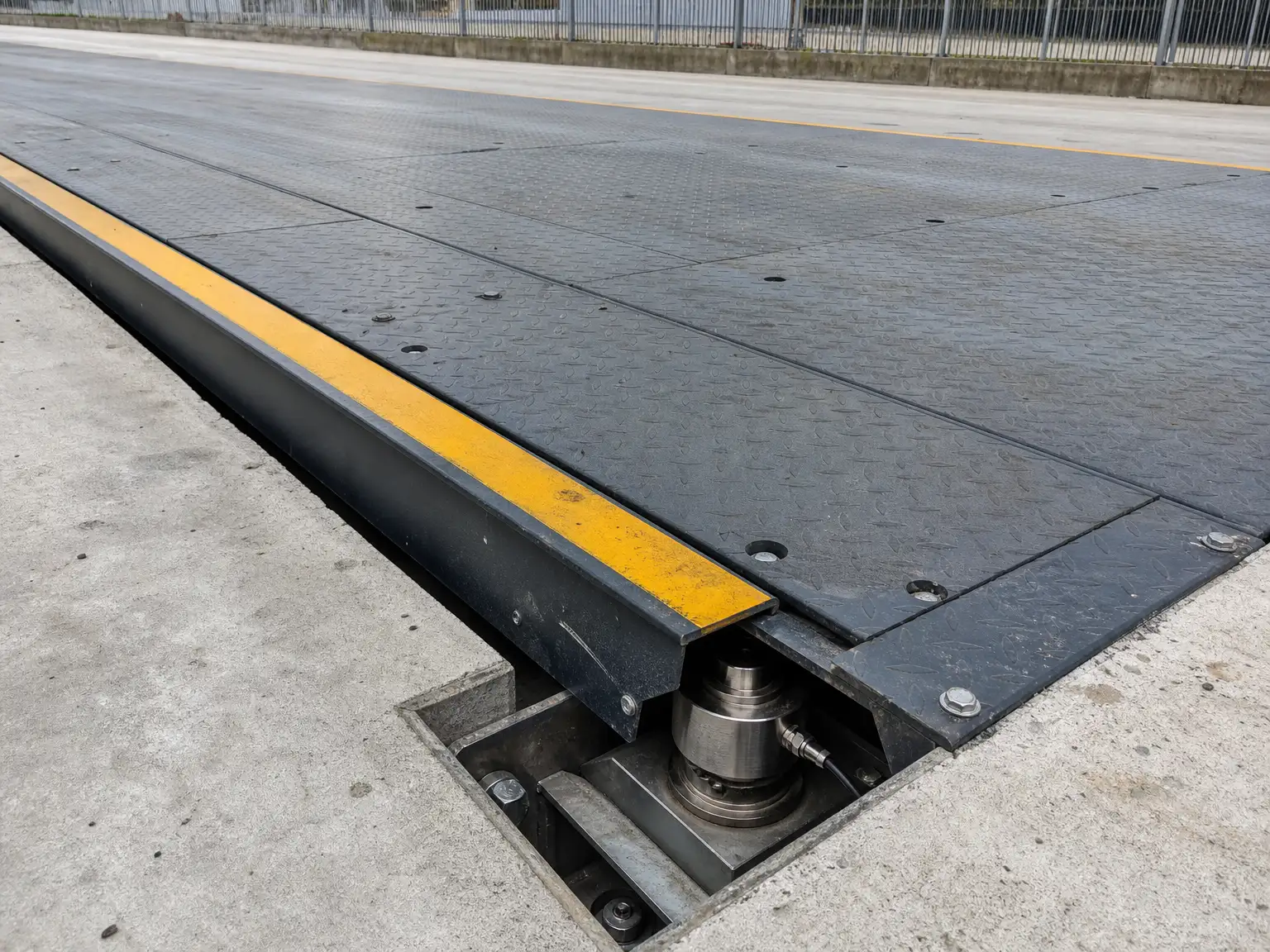
A weighbridge is not a piece of yard equipment. It is the till. Every tonne that crosses it becomes an invoice, a royalty figure, a delivery note or a customs declaration, and the reading is the only evidence anyone will accept later. On a site moving 60 truckloads a day at 30 tonnes a load, a bridge reading half a percent light gives away roughly nine tonnes of product daily - and nobody notices, because the tickets all look perfectly normal.
The disputes are worse than the losses. A haulier whose ticket at your gate disagrees with the reading at the port stops trusting both, and where the load is bound for export that argument becomes a customs and invoicing problem with a paper trail attached. Weighing equipment used for trade is expected to be verifiable, so keep the calibration certificate and test record for every bridge on file where an inspector or an auditor can see it.
None of that is solved by buying a heavier deck. It is solved by sizing the bridge to the vehicles that will use it, founding it so it survives the rains, protecting the electronics from the grid and the lightning season, and proving accuracy with certified test weights at handover and on a schedule after that.